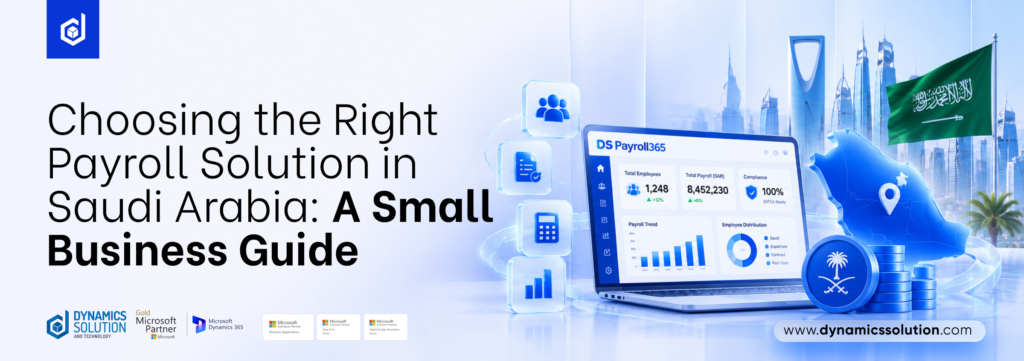
Managing payroll becomes increasingly complicated as a business grows. Calculating salaries, tracking attendance, managing leave, processing deductions, maintaining employee records, and meeting regulatory requirements can quickly become time-consuming when handled manually. The need for digital compliance in Saudi Arabia has reached an all-time high as the Kingdom’s SME sector expands to employ over 8.8 million private-sector workers.
Saudi Arabia’s Wage Protection Program had more than 1 million private-sector establishments registered on the Mudad platform by the end of 2025, covering 94% of private-sector establishments. More than 10 million workers had their wages documented, with over 17 million wage files processed. The figures underline the growing need for accurate and digitally managed payroll solutions in Saudi Arabia.
For small and medium sized businesses, adopting the right payroll solution will not only streamline these activities but also provide benefits of reduced administrative burdens and improve accuracy, giving your employees better access to payroll information.
If your business is caught between wanting to find a ‘payroll software for my company’ or the ‘best payroll software for a small business,’ then you must remember that each business has its own requirements depending on your size, compliance issues, integrations, and growth objectives.
When Should Your Business Consider a Payroll Solution?
Small businesses often start by managing payroll through spreadsheets or manual processes. This may work when there are only a few employees, but payroll becomes more difficult as headcount and business requirements increase.
Running a payroll involves several recurring responsibilities, including employee pay, time and attendance, leave, deductions, benefits, payroll records, and system integrations. Outsourcing or automating these activities can reduce the workload placed on small business teams.
You may need a dedicated payroll solution if:
- Payroll takes several hours every month.
- Salary calculations are performed manually.
- Employee information is stored across different systems.
- Payroll errors or delays occur frequently.
- HR and payroll teams repeatedly enter the same information.
- You struggle to maintain accurate employee records.
- Your workforce is growing.
- You need stronger payroll compliance controls.
- Employees frequently request salary slips or payroll information.
If you are thinking, “I need a payroll solution for my company,” these are strong indicators that it may be time to replace manual payroll processes with an integrated system.
Read More: How a Payroll Solution for Small Business Drives Scalable Growth
What Should You Look for in a Payroll Solution?
Choosing payroll software should involve more than comparing prices. The best system should solve your current payroll challenges while supporting future growth.
Here are the key factors to consider.
1. Automated Salary Calculations
Manual salary calculations increase the possibility of errors, especially when employees have different salaries, allowances, deductions, overtime, commissions, or leave adjustments.
A modern payroll solution should automate salary calculations based on predefined rules and employee information.
Automation can help businesses reduce repetitive data entry and improve consistency across payroll cycles.
2. Attendance and Leave Integration
Payroll should not operate separately from HR.
Attendance, overtime, leave, shifts, and employee information can all affect payroll calculations. An integrated payroll system can connect these processes so that payroll teams do not have to repeatedly transfer information between spreadsheets or applications.
This is particularly useful for businesses with shift-based, hourly, or distributed employees.
3. Employee Self-Service
Employees increasingly expect digital access to their payroll information.
Look for a payroll system that provides employee self-service features such as:
- Digital payslips
- Leave requests
- Attendance information
- Employee profile updates
- Payroll history
- Approval workflows
Self-service can reduce routine HR queries while giving employees greater visibility into their own information.
4. Payroll and HR Integration
If you are thinking, “I need a system to manage payroll and HR,” consider a solution that combines both areas instead of maintaining disconnected systems.
An integrated platform can centralize employee information and connect HR processes with payroll. This can reduce duplicate data entry and improve visibility for HR and finance teams.
5. Compliance Capabilities
Compliance should be one of the most important considerations when selecting payroll software.
For businesses in Saudi Arabia, payroll systems should support processes relevant to local requirements, including wage-related payroll processes and employee records.
A suitable payroll solution should help businesses maintain accurate payroll data and support the processes required for Saudi payroll operations.
Read More: DS Payroll 365: Redefining HR Operations for the Modern Workforce
Essential Local Capabilities for Saudi Payroll
Choosing generic international payroll software can leave your Saudi business struggling with compliance gaps. A localized payroll platform must handle KSA-specific salary structures, localized allowances, and attendance integration while giving employees self-service access and providing native connectivity to core financial platforms.
To ensure complete regulatory compliance, your payroll system should natively support direct integrations across key local government portals, including:
- GOSI-related payroll processes: Automating monthly contribution calculations and employee status tracking.
- MHRSD-related employee workflows: Aligning workforce processes with official labor regulation standards.
- Mudad / WPS processes: Generating and uploading accurate Wage Protection System files to prevent compliance delays.
- Muqeem-related employee records: Maintaining up-to-date documentation for resident workforce management.
Combining these localized government integrations with automated salary calculations, time and attendance sync, employee self-service (ESS), and enterprise ERP/accounting connections ensures your company remains fully compliant while scaling operations.
Read More: DS Payroll 365: The Intelligent Payroll & HR Solution for Saudi Arabia
How Can I Automate Payroll in My Company?
Start by identifying the payroll activities currently performed manually.
For example, a typical automated payroll workflow can look like this:
Employee Data → Attendance & Leave → Overtime → Salary Calculation → Deductions → Payroll Approval → Payslip Generation → Payroll Reporting
Instead of entering information separately into multiple spreadsheets, an integrated payroll solution can connect these processes.
Automation can help reduce repetitive administrative tasks and provide a more consistent payroll process.
If “I want to automate payroll for my business,” the goal should not simply be to automate salary calculations. Look for a system that automates the wider payroll workflow.
Read More: DS Payroll 365: Redefining HR Operations for the Modern Workforce
How to Choose the Best Payroll Software in Saudi Arabia?
Generic international payroll platforms often fall short in KSA because they lack native support for Saudi labor laws, localized allowances, and official compliance channels.
For an SME, the ideal system should be simple enough for everyday use but powerful enough to automate core payroll and HR processes
The right payroll solution in Saudi Arabia should reduce manual work, improve payroll accuracy, support compliance, and give your business room to grow.
Read More: Modernizing HR: Align Your Payroll Strategies for Business Success in Saudi Arabia
Ready to Modernize Your Payroll?
Discover how DS Payroll 365 can help your business automate payroll processes, manage employee information, connect HR and payroll operations, and support scalable workforce management on Microsoft Dynamics 365.
Get in touch with Dynamics Solution and Technology to explore a payroll and HR platform built for modern business operations: https://dynamicssolution.com/
FAQs
Q1. What is the best payroll software for a small business in KSA?
The best payroll software should automate salary calculations, manage attendance and leave, support Saudi payroll requirements, and scale with your business.
Q2. Which payroll system is suitable for SMEs in Saudi Arabia?
An ideal payroll system for SMEs in Saudi Arabia should be easy to use, cost-effective, scalable, and capable of supporting GOSI, Wage Protection, employee self-service, and payroll reporting.
Q3. How can I automate payroll in my company?
You can automate payroll by using a payroll solution that connects employee data, attendance, leave, overtime, deductions, salary calculations, approvals, and payslips in one system.
Q4. What should I look for in payroll software in Saudi Arabia?
Look for payroll software in Saudi Arabia that supports local payroll requirements, GOSI and Wage Protection processes, HR integration, employee self-service, reporting, and secure employee data management.
Q5. Can payroll software integrate with HR and accounting?
Yes. Modern payroll solutions can integrate payroll with HR and accounting systems, helping reduce duplicate data entry and improve financial and workforce visibility.










 United Kingdom
 Saudi Arabia
 Canada
 UAE
UAE South Africa
 Pakistan
 India
India Malaysia
 Bahrain