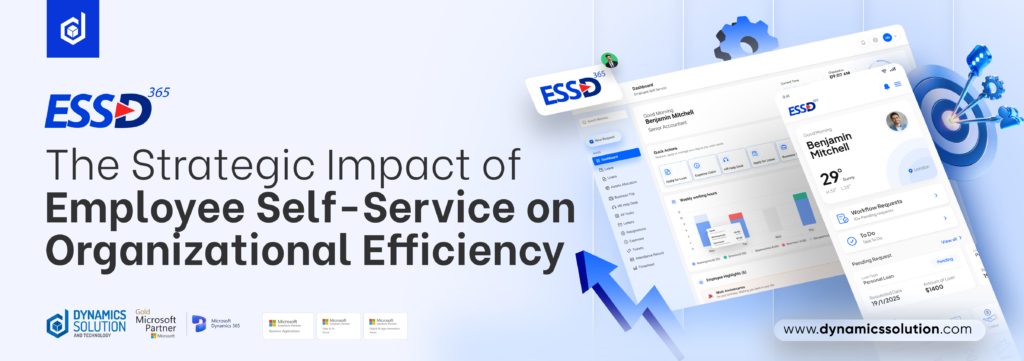
Employee Self-Service (ESS) has evolved into an essential part of modern workforce management. By giving employees direct access to payroll information, personal records, and HR services, organizations can create a faster, more transparent, and more empowering employee experience.
Instead of relying on HR teams for every routine request, employees can independently access the information and services they need whether they are working from the office, remotely, or on the move.
For many HR professionals, managing daily employee queries can take valuable time away from strategic priorities. Questions about payslips, tax deductions, benefits, leave balances, and company policies often require repeated emails, calls, and manual follow-ups. Over time, these routine tasks can place unnecessary pressure on HR teams.
At the same time, HR departments are expected to do much more than administrative work. They must support employees, strengthen workplace relationships, improve engagement, and contribute to broader workforce strategies. Balancing these responsibilities can become increasingly challenging as organizations grow.
An Employee Self-Service Portal helps address this challenge by creating a centralized digital space for everyday HR needs. Employees can submit leave requests, access payroll documents, review personal information, stay updated on company events, and share feedback through a single platform.
Available across desktop and mobile devices, ESS solutions make HR services more accessible while reducing administrative dependency. The result is a more efficient HR function, greater employee autonomy, and a workplace built around connected and convenient digital experiences.
Employee Portals: Turning Administrative Time into Workforce Productivity
Modern Employee Self-Service Portals are helping organizations reduce the administrative burden on HR teams by simplifying document access and everyday employee requests.
By digitizing routine HR processes, businesses can significantly reduce the time spent on manual document management and repetitive tasks. This gives HR professionals more time to focus on strategic workforce initiatives, employee engagement, and organizational growth.
From less administrative pressure to more productive HR teams, employee portals are changing how modern workplaces operate.
How Employee Self-Service Is Reshaping Modern HR Operations
Human Resources teams are responsible for managing some of the most important aspects of an organization from employee records and onboarding to attendance, leave, payroll, training, and workforce engagement. As businesses grow, handling these responsibilities through manual processes can quickly create delays, administrative pressure, and unnecessary dependency on HR teams.
Employee Self-Service (ESS) is changing this model by giving employees direct access to essential HR services and information. Instead of waiting for HR to handle every routine request, employees can complete many tasks independently through a centralized digital portal.
Better Data, Greater Accuracy
When employees can review and update their own personal information, organizations gain access to more reliable and up-to-date workforce data. This reduces unnecessary manual data entry and helps HR teams maintain cleaner employee records.
With the right approval workflows in place, employee updates can also be reviewed and managed efficiently, creating greater control over workforce information.
One Digital Space for Employee Communication
Keeping employees informed no longer requires multiple emails, phone calls, or manual communication. An ESS portal can act as a centralized communication channel for important announcements, company updates, events, policies, and internal programs.
Employees can access relevant information directly through the platform, helping organizations improve communication consistency and ensure important updates reach the right people.
Giving HR More Time for Strategic Work
HR professionals spend a significant amount of time managing repetitive requests and administrative processes. From responding to employee queries to processing leave applications and handling documentation, these tasks can consume valuable working hours.
ESS reduces this administrative workload by allowing employees to access information and submit requests independently. As a result, HR teams can focus more on strategic priorities such as employee development, workforce planning, talent management, and organizational growth.
Creating a More Empowered Workforce
Employees expect fast and convenient access to workplace information. An Employee Self-Service portal gives them greater control over their everyday HR interactions.
Employees can view payslips, check attendance records, review available leave, update personal details, submit requests, upload documents, and access relevant HR information through a single platform.
This level of accessibility creates a more transparent employee experience and encourages individuals to take greater ownership of their workplace responsibilities.
Why HR Teams Need Employee Self-Service
The HR department plays a central role in the success of every organization. However, as the workforce expands, managing employee-related processes manually becomes increasingly difficult.
Recruitment, onboarding, attendance, leave management, payroll coordination, training, and employee records all require time and attention. When HR teams are constantly occupied with repetitive administrative work, their ability to contribute to broader business goals can be limited.
Employee Self-Service helps organizations move away from paper-based and highly manual HR processes. By digitizing everyday employee interactions, ESS can help create a more efficient, connected, and modern HR environment.
ESS Benefits Both Employees and Organizations
The value of Employee Self-Service extends beyond HR. Employees benefit from faster access to information and greater control over their requests, while organizations gain improved process visibility and operational efficiency.
A connected ESS platform can improve communication between employees, managers, and HR teams. Leave applications can be submitted digitally, approvals can move through defined workflows, and important employee information can be accessed without unnecessary delays.
For managers, this creates better visibility into employee requests and approvals. For HR teams, it reduces repetitive workload and improves process control. For employees, it delivers a more convenient and transparent experience.
Transforming Employee Experience with Digital HR
Employee Self-Service is no longer simply an HR convenience. It has become an important part of modern workforce management. Organizations that invest in ESS can improve accessibility, strengthen internal communication, and create a more digitally connected employee experience.
Dynamics Solution and Technology delivers a powerful Employee Self Service solution (ESS D365) designed to help organizations modernize HR operations and empower their workforce. From employee information and payslips to leave requests, approvals, and digital HR interactions, the solution brings essential employee services together in one connected platform.
With Dynamics Solution and Technology’s ESS, businesses can give employees the digital experience they expect while enabling HR teams to work with greater efficiency and strategic focus.
Modernize your HR operations with a smarter Employee Self-Service experience from Dynamics Solution and Technology.











 United Kingdom
 Saudi Arabia
 Canada
 UAE
UAE South Africa
 Pakistan
 India
India Malaysia
 Bahrain